Event
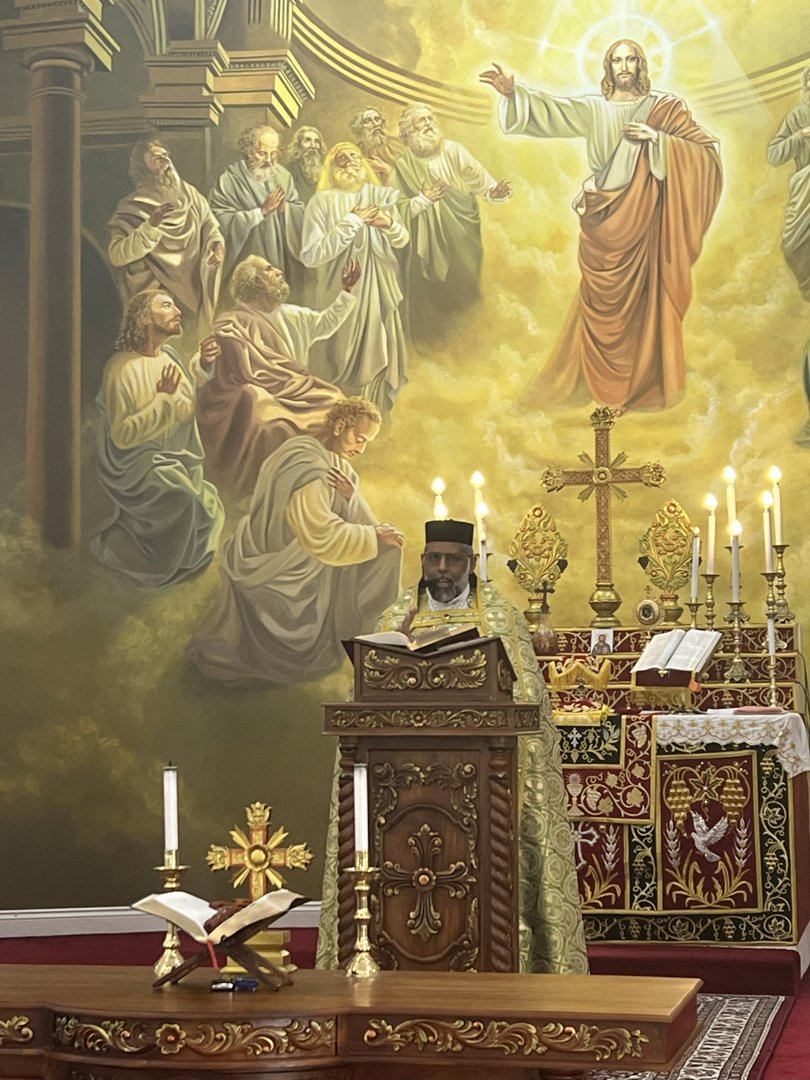
Sermon on Eternal Life by Rev. Fr. Anish Mathew | October 26, 2025
Dear parents, brothers, sisters, and children,
Today, on the sixth Sunday after the Feast of Sleeba (Sleeba Perunnal), we are gathered here in this church. The scripture passage we read today is from St. Luke Chapter 18, Verses 18 to 27. In this passage, a Jewish leader approaches Jesus and asks, “Good Teacher, what must I do to inherit eternal life?” Jesus responds gently, saying, “Why do you call me good? No one is good except God alone.”
In our lives, how important is this concept of eternal life? Some of us may have thought about it, at least to some extent. In a life filled with various priorities, how much priority do we give to eternal life? There may be some among us who have never even thought about it once in their lifetime.
We all know that this earthly life is merely a temporary shelter. We are aware that we are only residing in this shelter for a short time. We know how long our forefathers lived, and we can expect to live roughly the same, or perhaps a little longer. There is no doubt about that. Eternal life, or nityajeevan as we call it, is a promise from God, and there is no doubt that He will grant it to us. However, God has laid down certain criteria for us to attain it.
These criteria include a person’s love for God, love for fellow human beings, and adherence to the commandments given by God. While living in this world, particularly in this worldly life, we must live with great care and faithfully fulfill the responsibilities entrusted to us. It is through this that a person becomes worthy of eternal life.
Often, we fail to pay enough attention to these areas or knowingly neglect them. When we talk about faithfulness in our responsibilities, consider this: from the moment a child is born until their death, they go through various stages and circumstances in life. As a child, they have responsibilities toward their parents. As they grow older and find a partner, a family is formed, and with it comes the responsibility of being a faithful spouse in the husband-wife relationship, filled with love and trust. When children are born, they take on the roles of parents, with their own set of responsibilities to fulfill faithfully.
In every stage of life, the responsibilities entrusted to us must be carried out beautifully and systematically. This is a fundamental criterion for attaining eternal life. In our lives, we think a lot about our priorities. For many of you sitting here, from the time you were students, you may have dreamed of studying abroad, working there, or settling down in a foreign land. You may have worked hard for it, made sacrifices, perhaps to obtain permanent residency or citizenship. These efforts and sacrifices are immense, often beyond imagination.
But when it comes to eternal life, do we show the same level of sacrifice or ambition? Often, we don’t. Many of us may do the minimum—attending church when convenient. But when life gets busy, what’s the first thing we avoid or postpone? It’s often church, isn’t it? If there’s an urgent need on a Sunday, the first thing we set aside is attending church. We might think, “I’ll go to church at 10 or 11, or maybe after 11,” but when another commitment arises, church is the first thing we skip.
It’s good to reflect on ourselves during this journey. The first thing to think about is: If I live this way, will I attain eternal life? Secondly, Am I aware of eternal life? Am I conscious of it? This world allows us to live for maybe 90 or 100 years, but there is another world beyond this one. Are we aware of that world? Thirdly, among the many goals we have in life, what priority does eternal life hold? Is it our first goal, our second, or somewhere further down the list?
Fourthly, when the man in the scripture stood before Jesus, Jesus told him, “You lack one thing.” The man claimed he had followed all the commandments perfectly since his youth. Yet, Jesus pointed out a shortcoming: “Sell everything you have and give to the poor.” That was the one thing he lacked. When we stand before God, what will He say about us? Will it be one shortcoming, nine, fifty, or eighty? It’s always good to reflect on this.
Finally, we should ask ourselves: Will the wealth we accumulate here—the dollars we earn—help us attain eternal life? Can we take even a percentage of what we’ve earned with us when we leave this world? It’s worth thinking about.
Dear ones, our life is very short. We don’t know when or how it will end. In this uncertain world, it’s always good to occasionally think about the life that awaits us after this one. The Bible teaches us through examples like Zacchaeus, the tax collector, and the parable of the prodigal son. These stories show us that even if we’ve gone to extremes, lost everything, or strayed far, if we have even a moment of desire to return, our Father will welcome us with open arms. There is no doubt about that.
I’m not saying we don’t need wealth in this world. But the issue lies in how we use it. If we hoard it thinking it will achieve something for us, it’s in vain. However, if we use our wealth in a way that stores treasures in heaven, then eternal life becomes much easier to attain. We need to raise our children and educate them well, but beyond that, consider this: at least 10% of the income God has given us belongs to Him. Giving to God doesn’t mean handing money directly to Him, but giving to those in need in His name. That is possible for each one of us. This is why we are called to give the tithe, or dashamsam. I know some of you here faithfully give your dashamsam, and I’ve seen this through your personal contributions.
Dear ones, when we leave this world and stand before God, we should have something stored up in heaven. May God help us organize our lives to achieve this. With that prayer, I conclude. May God bless you all.